
Comparing private equity and private infrastructure: What's the difference?
See the key differences between private equity and private infrastructure.
Clients often ask us about the differences between private equity and private infrastructure — so we’re breaking down the key distinctions and how to think about each when investing in private markets.
First, what is private infrastructure?
Simply put, it’s investments in essential services for our global economy.
Examples include:
- Transportation: Toll roads, airports, bridges, and public transit systems
- Renewable energy: Solar or wind farms and energy storage
- Environmental: Landfills and water treatment facilities
- Communication: Towers, data centers, and fiber
Comparatively, private equity is investing directly in private companies — typically to drive growth, improve operations, or execute a buyout — with the goal of generating returns when the company is eventually sold or taken public.
What roles do private infrastructure and private equity play in a portfolio?
Both private market investments offer diversification beyond traditional stocks and bonds, but they each play a different role in a diversified portfolio:
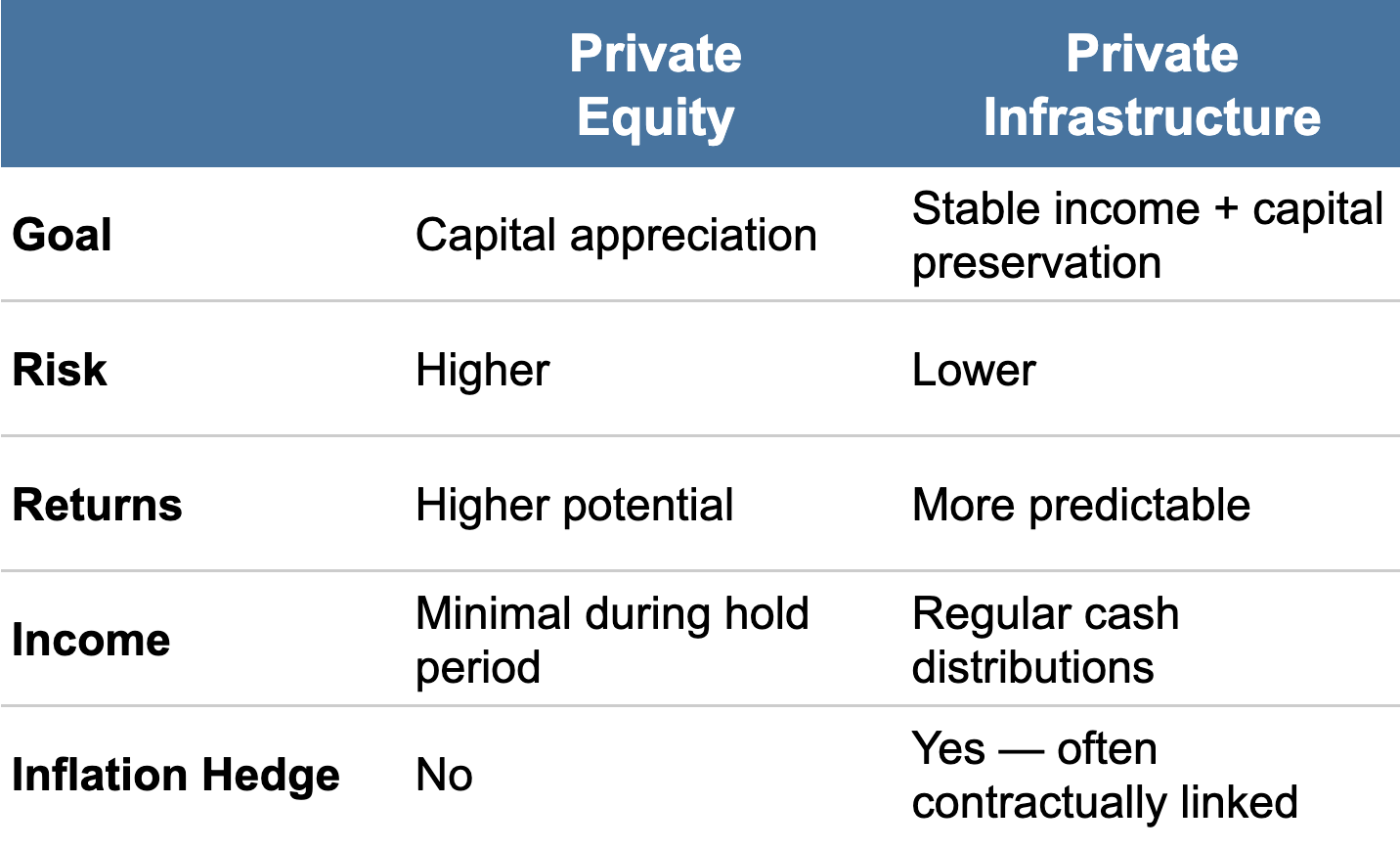
- Private equity generally has potential for higher returns.
- Private infrastructure can be a strategy to earn income and returns as a hedge against inflation, as it has historically offered positive performance in market downturns.
This table provides a snapshot of the key differences for investors to consider:
Ready to invest in private markets?
Learn about our private equity strategy or private infrastructure strategy
Get a diversified private markets portfolio built to weather market volatility.